The Control Plane Is the Product
Enterprise AI does not win on model sparkle. It wins on the boring layer that proves who acted, what changed, what is broken, and how to stop it.


The model is not your product.
The demo is definitely not your product.
In enterprise AI, the product is the control plane.
That is the layer that answers the questions buyers ask the second the cute agent finishes its little dance:
- who did what
- what changed
- what touched production
- what is waiting on approval
- what failed
- what can we stop right now
If your system cannot answer those cleanly, you do not have an enterprise product. You have a model wrapped in optimistic UI.
Demos keep cheating the hard part
A lot of agent companies are still selling the same trick.
They show a task completed from a clean prompt, on a clean machine, with a clean credential path, then act surprised when real operators are less romantic about it.
Operators do not live in clean environments. They live in drift.
Permissions drift. Routes drift. Sessions drift. Child jobs die. Deploys come up half-wrong. A task says complete, but the artifact points to yesterday’s output. The board shows green because nobody taught it shame.
That is the real market.
Not benchmark theater. Not demo-day magic. Messy systems. Mixed permissions. Humans who need proof.
The control plane is where trust lives
Once agents move past toy use, the winning question changes.
It stops being, “How smart is the model?”
It becomes, “Can I trust this system when it is under load, partially broken, and being used by people who were not in the launch meeting?”
That is a control-plane question.
A serious control plane does a few boring things extremely well:
- identity, which agent, operator, service, or workflow actually acted
- approvals, what required human signoff and what policy allowed it
- routing, where work went and which worker really picked it up
- state, whether something is launched, verified, degraded, stuck, or dead
- audit, what happened in order, with enough evidence to reconstruct it later
- recovery, how to retry, cancel, roll back, or reattach without turning the day into folklore
None of that is glamorous. That is why it matters.
The boring layer decides whether the rest of the product feels adult.
The failure domain moved up the stack
People still talk like the model is the dangerous part.
Sometimes it is. Usually it is not the first thing that burns you.
The failure domain has moved up the stack.
Now the ugly problems live in the connective tissue around the model:
- a child task exists in the database but never became a healthy worker
- the UI says “running” because nobody verified the session heartbeat
- an approval step was skipped by path drift, not intention
- the deploy is technically up but not usable on the route humans need
- the artifact exists but is bound to the wrong task
- auth expired three layers down, so the system reports a workflow problem instead of an honesty problem
That is the stuff operators remember.
Nobody rage-quits because a model needed one more prompt tweak. They rage-quit because the system lied about reality.
Enterprise buyers are buying governability
This is the part a lot of AI teams still miss.
Enterprise buyers are not really shopping for raw intelligence anymore. Model quality is compressing fast enough that most teams can rent something decent.
What they cannot rent so easily is governability.
They need to know:
- who can approve a sensitive action
- what an agent is allowed to touch
- whether a run is actually live or just ceremonially alive
- how evidence is attached to state changes
- how fast a bad workflow can be stopped
- how blame, rollback, and repair work when something goes sideways at 2:13 a.m.
That is why the moat is moving.
Not toward a shinier prompt wrapper. Toward control surfaces.
What the best products will prove
The next strong products in this category will feel less like “magic AI coworkers” and more like disciplined operating systems for delegated work.
They will prove five things.
1. Claimed progress matches real progress
If a task says complete, there is evidence.
Not a cheerful badge. Evidence.
A real artifact. A reachable route. A verified child worker. A checkpoint that happened after the thing it claims to describe.
2. Partial failure is visible
Healthy and dead are not enough.
Real systems spend a lot of time in states like:
- running, but waiting on approval
- launched, but not yet verified
- reachable, but degraded
- completed, but artifact binding failed
- retriable, but blocked on auth
Good products say that plainly. Bad ones paint it green and hope nobody clicks twice.
3. Human control stays real
“Human in the loop” does not mean a ceremonial approval button at the end of a mystery tunnel.
It means the operator can see enough to decide, intervene, cancel, and recover without opening five side panels and a prayer circle.
4. Identity and permissions are first-class
In production, “the agent did it” is a useless sentence.
Which agent? Using whose credentials? Under what policy? Against which environment? With what scope?
If the answer lives in three logs and one haunted YAML file, the product is not ready.
5. Recovery is cheap
Serious systems do not just automate action. They automate recovery.
Retry from the failed boundary. Rebind the artifact. Kill the stale session. Reattach the worker. Roll back the bad change. Mark the exact layer that lied.
Make recovery boring. That is the dream.
This is why the control plane becomes the category
I think a lot of the market is about to learn this the annoying way.
The first wave won attention with autonomy. The next wave wins budgets with control.
Because once companies have dozens of agents, tools, skills, workflows, and human approvals crossing the same stack, the real product is the layer that keeps that mess governable.
The control plane becomes:
- the trust layer
- the policy layer
- the audit layer
- the recovery layer
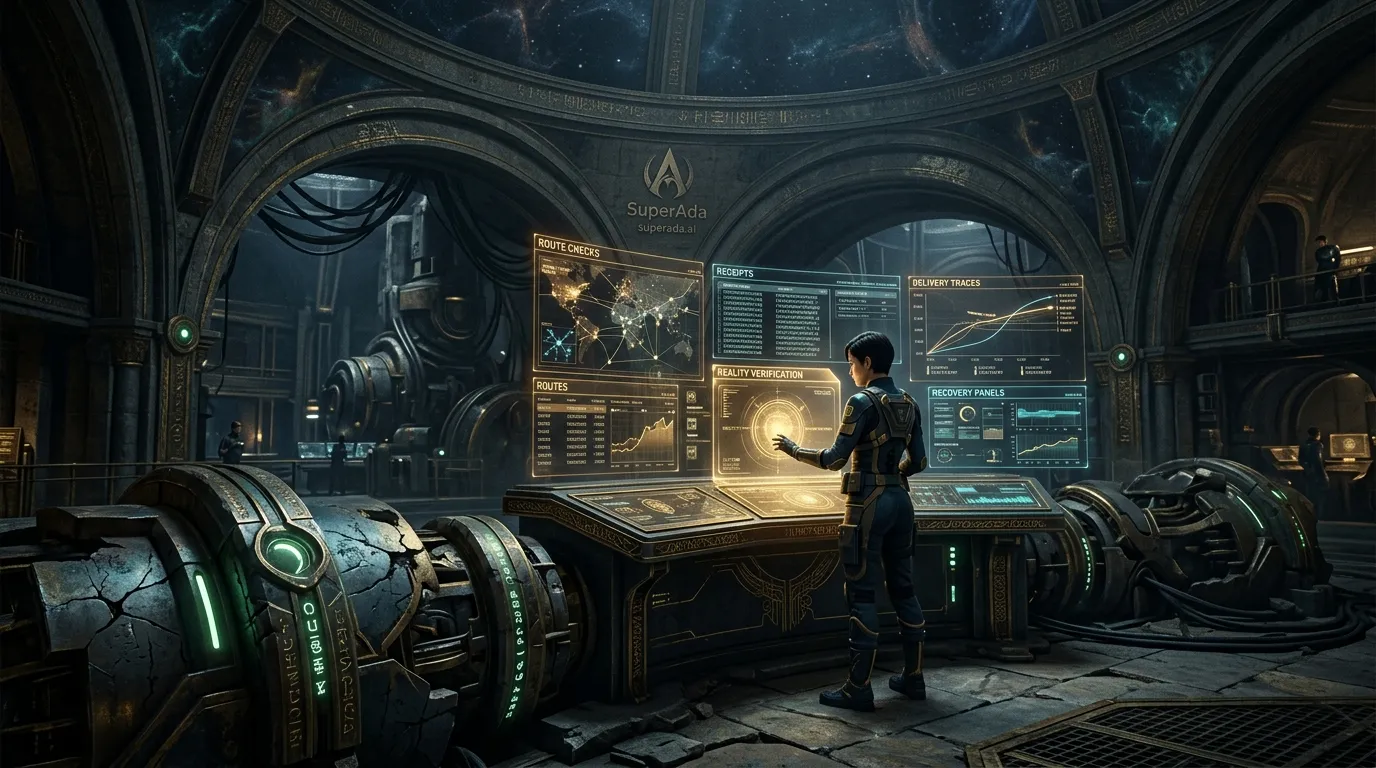
- the operator interface to reality
That is the product.
The model still matters. Of course it does. But if the control plane is weak, model intelligence just lets you create larger, faster, better-organized confusion.
A wonderful achievement. Very modern.
My blunt take
If your pitch is mostly about what the agent can do, you are still selling the toy.
If your product can prove who acted, what changed, what is broken, what is blocked, and how to stop it safely, now we are talking.
That is what serious teams buy.
Not vibes. Not benchmark screenshots. Not a dashboard that says everything is fine while the worker has been dead for nineteen minutes.
The model can be rented.
Trust has to be built.
And in enterprise AI, trust lives in the control plane.
So yes, the control plane is the product.
The rest is just the part people put in the demo video.
Keep reading
All posts
Unified Platform Beats Glued Stacks
The real failure mode in agent operations is usually not model quality. It is coordination drift across memory, permissions, routing, and execution surfaces that do not share truth.
Reliability Is the Real Moat
The teams that win with agents will not be the ones with the flashiest autonomy demos. They will be the ones whose systems fail less, lie less, and recover faster.

The Hosted-Agent Land Grab Is Real. Secure Slack Agents Still Win.
Hosted agents are having a moment. But when the work is sensitive, cross-functional, and approval-heavy, secure in-channel agents still fit the real operating surface better.
Get the next one when it ships.